
Starting in the academic session of 2024-25. Students from classes 6 to 8 across over 40,000 government schools in Uttar Pradesh will learn programming languages like Scratch and Python. These schools, which operate under the state’s Basic Education Council, will now include coding in their curriculum. Scratch is a visual language designed to help children understand the basics of coding, while Python is a widely-used programming language for web development, data analysis, and scientific computing. The curriculum changes aim to enhance the digital literacy of students, covering topics such as […]
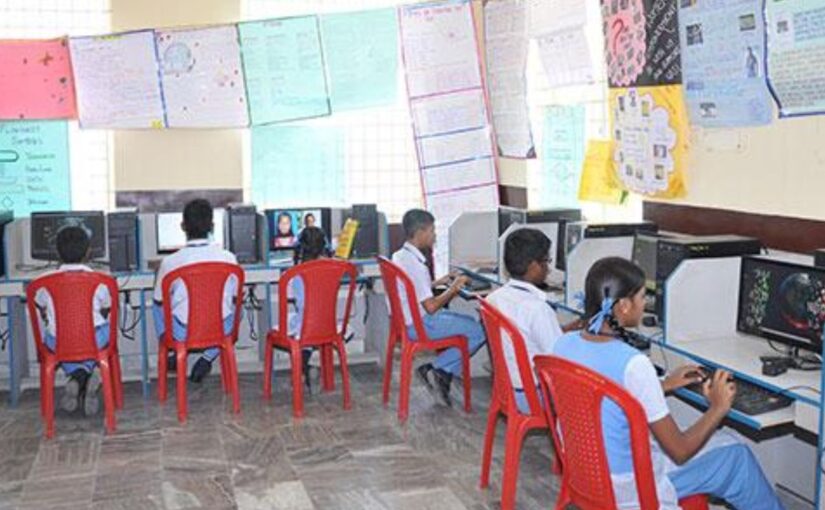
Uttar Pradesh To Introduce Coding In 40,000 Government Schools
Starting in the academic session of 2024-25. Students from classes 6 to 8 across over 40,000 government schools in Uttar Pradesh will learn programming languages like Scratch and Python. These schools, which operate under the state’s Basic Education Council, will now include coding in their curriculum. Scratch is a visual language designed to help children understand the basics of coding, while Python is a widely-used programming language for web development, data analysis, and scientific computing.
The curriculum changes aim to enhance the digital literacy of students, covering topics such as Microsoft Paint, Microsoft Word, and Stepwise Thinking in Class 6. Class 7 will introduce students to logical thinking, coding with Scratch, Python tokens, and Artificial Intelligence. In Class 8, students will learn about networking, cybersecurity, and user input in Python, among other topics.
Teachers in Uttar Pradesh are being trained to teach these subjects. The District Institutes of Education and Training (DIETs) have been conducting five-day training sessions for teachers in batches of 200. According to officials from the state’s Basic Education Department. The training is focused on equipping teachers to handle the new computer curriculum added to the science syllabus. The DIET-Prayagraj, for example, has already completed training for three batches, with the fourth and final batch set to conclude by December 30.
Read More: AAP Promises 24-Hour Water Supply And Welfare Schemes Ahead Of Delhi Elections
Despite the enthusiasm for introducing coding in schools, a significant challenge remains: the lack of computers in most government schools. Many schools do not have the infrastructure needed to teach coding practically. While some schools have Smart TVs, these are not enough to fully support the hands-on learning needed for programming. Over 90% of these schools still lack the necessary facilities to teach subjects like computational thinking and artificial intelligence effectively.
The addition of coding topics has significantly expanded the computer curriculum. Until last year, computers were only included as a single lesson in the science textbook. This year, however, seven lessons on computers have been incorporated in the science curriculum of each class. Furthermore this is making it harder for teachers to cover all the content without proper resources.
While the government’s move to introduce coding at an early age is commendable. There is an urgent need to bridge the gap in infrastructure. Without the proper tools and equipment, teaching programming languages like Python and Scratch will remain a challenge, and students may not gain the full benefit of these subjects. The next step for the state should be ensuring that schools are properly equipped to teach these essential skills, allowing students to develop the digital competencies needed in the modern world.